
"European coffee bans"
200 article(s) found

Fine Coffee Science explains the spread History of Coffee in detail (1)
In 622, Muhammad, the prophet of Islam, led the believers to migrate from Mecca to Medina and began to establish a church state, which developed into a powerful empire spanning Central Asia to the Liberian Peninsula in a century. Ethiopia, the origin of coffee, was included in the Ilan Empire and remained independent as a Christian country. Coffee began to flow from Ethiopia to Afghanistan in the early 11th century.

Coffee culture the development process of coffee history in the world
In 622, Muhammad, the prophet of Islam, led the believers to migrate from Mecca to Medina and began to establish a church state, which developed into a powerful empire spanning Central Asia to the Liberian Peninsula in a century. Ethiopia, the origin of coffee, was included in the Ilan Empire and remained independent as a Christian country. Coffee began to flow from Ethiopia to Afghanistan in the early 11th century.

How did African coffee beans be accepted by European civilization?
How did African coffee beans be accepted by European civilization?
Anecdotes of British cafes
British cafes are exclusive to men, and women (except the landlady) are not allowed in. The situation angered British women. In 1674, when cafes were in full swing in England, British women published the "Application for Women to boycott Coffee". They complained that the dignity of British men was now gone because of excessive consumption of the latest popular, pagan drink coffee.

A brief History of World Coffee basic knowledge of Fine Coffee Culture
In 622, Muhammad, the prophet of Islam, led the believers to migrate from Mecca to Medina and began to establish a church state, which developed into a powerful empire spanning Central Asia to the Liberian Peninsula in a century. Ethiopia, the origin of coffee, was included in the Ilan Empire and remained independent as a Christian country. Coffee began to flow from Ethiopia to Afghanistan in the early 11th century.
A brief History of World Coffee (1) the World History of Fine Coffee
In 622, Muhammad, the prophet of Islam, led the believers to migrate from Mecca to Medina and began to establish a church state, which developed into a powerful empire spanning Central Asia to the Liberian Peninsula in a century. Ethiopia, the origin of coffee, was included in the Ilan Empire and remained independent as a Christian country. Coffee began to flow from Ethiopia to Afghanistan in the early 11th century.
Boutique Culture Common sense Coffee Culture in Europe
Only on the coffee table can you see the playful side of the Europeans. Gossip is spread on the coffee table, and if there is no coffee in continental Europe, people's lives will be half tarnished. When a Venetian merchant who only wanted to make some money introduced coffee to the European continent in the 17th century, he did not know how the small bag of mysterious black powder had completely changed Europe in the following centuries.

The Origin and Development of Coffee Culture in Europe an important part of Life
Only on the coffee table can you see the playful side of the Europeans. Gossip is spread on the coffee table, and if there is no coffee in continental Europe, people's lives will be half tarnished. When a Venetian merchant who only wanted to make some money introduced coffee to the European continent in the 17th century, he did not know how the small bag of mysterious black powder had completely changed Europe in the following centuries.
Learn about British coffee culture by "being a local" in British cafes
For the exchange of professional baristas, please follow the coffee workshop (Wechat official account cafe_style) Let's take a look at this era all over Europe. How it spreads varies from country to country, but in the middle is a story about when to offer new ways of eating, such as coffee shops. The spread of coffee in Britain is said to be cited by the Oxford Cafe, which was founded around 1650.

General knowledge of boutique coffee anecdotes of British cafes
British cafes are exclusive to men, and women (except the landlady) are not allowed in. The situation angered British women. In 1674, when cafes were in full swing in England, British women published the "Application for Women to boycott Coffee". They complained that the dignity of British men was now gone because of excessive consumption of the latest popular, pagan drink coffee.

The Cultural course of Coffee and European Coffee
From the end of the 15th century to the beginning of the 16th century, coffee was already a popular drink in the Middle East, but it was also regarded as a kind of medicine. European ambassadors and merchants in the Turkish Empire also believed that coffee was a healthy drink with special curative effects, and many positive comments helped to import coffee into Europe. Lovov, a famous German doctor and botanist, wrote a book about coffee as early as 1582, but

The Story of Fine Coffee Culture the Story of British Cafe
British cafes are exclusive to men, and women (except the landlady) are not allowed in. The situation angered British women. In 1674, when cafes were in full swing in England, British women published the "Application for Women to boycott Coffee". They complained that the dignity of British men was now gone because of excessive consumption of the latest popular, pagan drink coffee.

The Origin of Coffee
The people chewed the fruit of this plant at first to cheer them up, then baked and ground it into flour to make bread, which was used as food for warriors to improve their courage to fight.

Why do foreigners like drinking coffee? This paper briefly introduces the origin and development history of foreign coffee.
The earliest coffee beans originated in Ethiopia. In 525 AD, Ethiopian troops invaded Yemen, and coffee beans were brought to Yemen by soldiers. According to records, coffee trees began to be planted in Yemen in 575 AD. Later, coffee beans were also brought to Egypt by Sudanese black slaves who were shipped to Egypt. After coffee was introduced into the Arab world, it was first used as a herb by Arabs to treat biases.
How are coffee beans from Africa accepted by European civilization?
How are coffee beans from Africa accepted by European civilization? Balzac carries a coffee pot with him. With the help of this drink, he can write for 12 hours a day. Beethoven must not use less than 60 grams of coffee beans per cup of coffee, otherwise he will be furious. It is said that Voltaire drinks 50 cups of coffee a day except coffee, no drink can be in the history of human civilization.
World & A brief introduction to the Development History of Coffee in China
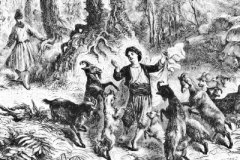
Origin: coffee was first discovered in the kaffa region of southern Ethiopia in the 6th century AD. So far, there is no specific historical data about the origin of coffee, what has been handed down are several different legends, but it is more recognized that Cuddy, the shepherd, discovered the coffee. Legend has it that Kadi, a shepherd in Kafa province in southern Ethiopia, drives his sheep every day.
Coffee training Culture Coffee and Japan
As early as the end of the 17th century, the Dutch brought coffee to Asia in the early 18th century, and coffee was soon introduced to Japan. Before and after the Meiji Restoration, Japan advocated total westernization, and the coffee culture with Dutch flavor took root in Japan. During the Taisho period (1879-1926), due to the pervasive atmosphere of freedom and democracy, fresh and luxuriant culture, cafes have been very prosperous. But with the Japanese army,
There is a famous saying in Europe: you can't face life without a cup of coffee in the morning.
Only on the coffee table can you see the playful side of the Europeans. Gossip is spread on the coffee table, and if there is no coffee in continental Europe, people's lives will be half tarnished. When a Venetian merchant who only wanted to make some money introduced coffee to the European continent in the 17th century, he did not know how the small bag of mysterious black powder had completely changed Europe in the following centuries.

No foreign trash! Starbucks paper cups face garbage disposal crisis, China no longer accepts foreign garbage
Professional coffee knowledge exchange More coffee bean information Please pay attention to coffee workshop (Weixin Official Accounts cafe_style) A cruise ship loaded with thousands of tons of solid waste, sailing from a dock in a certain country, sailing to the high seas to trade with people, and then landing at the port of our country, through false reporting, concealment, hiding and other ways to avoid customs supervision, or directly bypass customs, that is, bypass customs into the country privately. ever

The spread of Coffee Culture
The spread of coffee into the Arab world: in 525 AD, Ethiopian troops invaded Yemen, and coffee beans were brought to Yemen by soldiers. According to records, coffee trees began to be planted in Yemen in 575 AD. Later, coffee beans were also brought to Egypt by Sudanese black slaves who were shipped to Egypt. After coffee was introduced into the Arab world, it was first used as a herb by Arabs to treat biases.